Paper Label Manufacturer in Delhi NCR | Gurunanak Enterprises
Introduction
A paper label is one of the first things a customer notices on your product. It tells them what the product is, who made it, and whether they can trust the brand. When a label peels, smudges, or looks dull, customers do not blame the adhesive. They judge the brand, often within just a few seconds.
As a paper label manufacturer serving businesses across Delhi NCR, we understand how important quality labeling is. A good label is not just printed paper. It combines the right paper, adhesive, and finish to suit a particular product and surface. In this blog, we explain the types of paper labels we manufacture, how the manufacturing process works, and what you should know before placing an order.
What Is a Paper Label?
A paper label is a label whose printable face is made of paper. It carries your brand name, product details, barcode, batch number, manufacturing or expiry date, or logo. It can be applied to boxes, bottles, jars, pouches, cartons, files, and other packaging materials.
Most modern paper labels are self-adhesive, meaning they have a sticky backing and a release liner that can be peeled away before application. Some labels are applied using gum or glue, which remains common in bulk packaging applications.
Paper provides excellent printability, allowing sharp text and clear colours at a reasonable cost. It can be cut into almost any size or shape, produced in small or large quantities, and finished in different ways. This makes paper one of the most widely used labeling materials across industries, from small businesses to large manufacturing plants.
Types of Paper Labels We Manufacture
1. Plain Printed Paper Labels
These are everyday labels that carry a brand name, product description, and usage instructions. They can be printed in a single colour or full colour and are suitable for boxes, jars, bags, bottles, and cartons across different industries.
For many businesses, a well-made plain paper label is all they need. Clean printing, accurate information, and the right adhesive are the key factors that determine its performance.
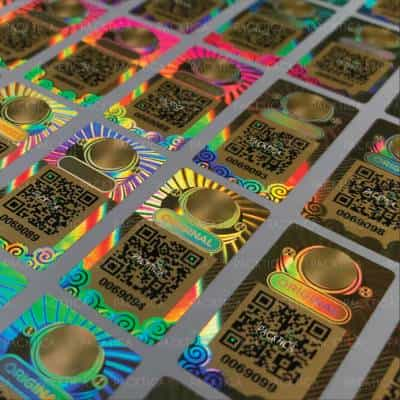
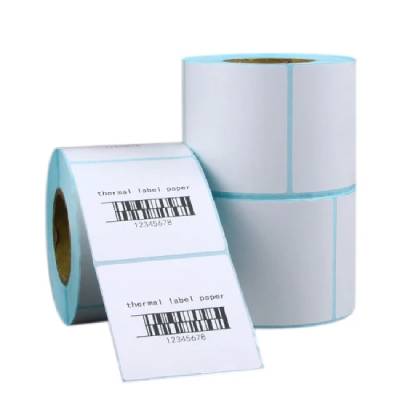
2. Barcode and QR Code Labels
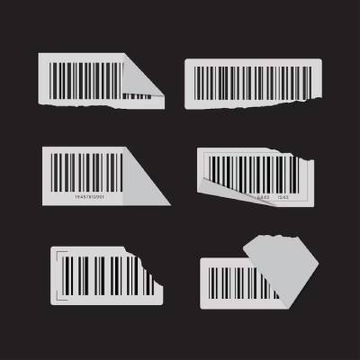
Barcode labels require sharp, high-contrast printing so scanners can read them accurately. We pay attention to print clarity, paper smoothness, and sufficient clear space around the code.
These labels are widely used for inventory management, billing, warehouse tracking, and retail operations. An unreadable barcode can slow down an entire production or billing process, making print quality especially important.
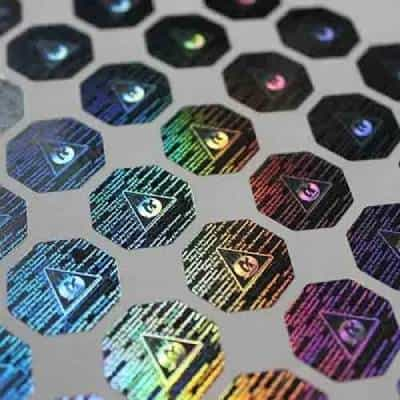
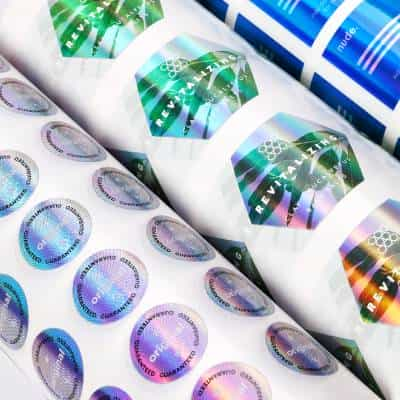
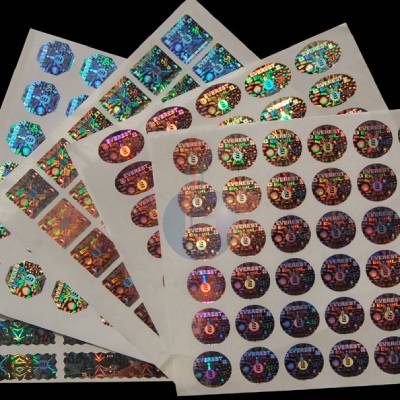
3. Hologram Paper Labels
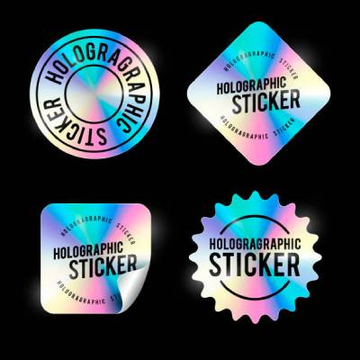
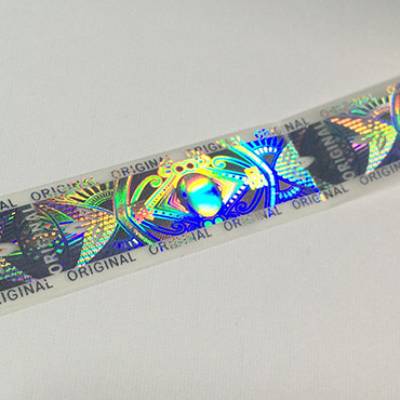
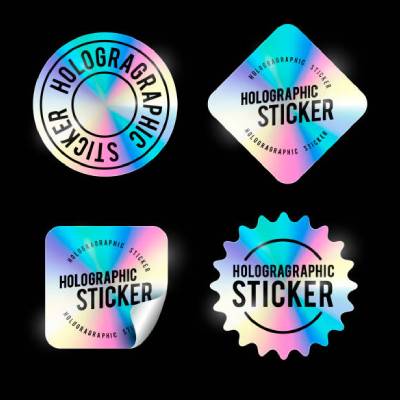
A hologram paper label combines a paper face with a hologram strip, patch, or other holographic element. The paper section carries product information, while the hologram adds a distinctive appearance and an additional security feature.
These labels are useful for brands that want to protect their products against counterfeiting. They can also accommodate batch numbers, prices, ingredients, and other product details.
4. Tamper Evident Paper Labels
Tamper evident paper labels are made from specially designed materials that can break into small pieces when someone attempts to remove them. This makes it difficult to peel off the label intact and reuse it.
They are often applied across box openings or bottle caps, allowing customers to identify whether a package may have been opened or tampered with.
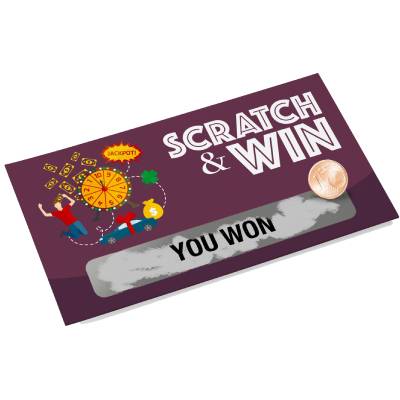
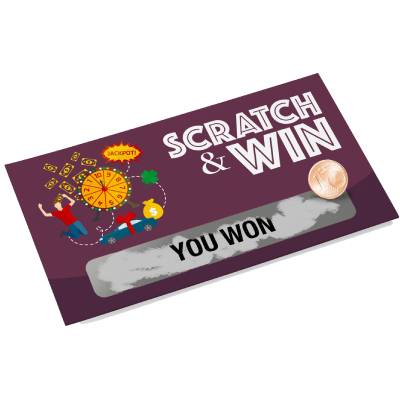
5. Scratch-Off and Variable Data Labels
Scratch-off labels conceal a code or message beneath a scratchable layer. They are commonly used for product verification, promotional campaigns, and coupons.
Variable data labels carry different serial numbers, batch codes, dates, or names on individual labels. This makes it easier to trace each label to a particular batch, product, or customer.
How We Manufacture Paper Labels Step by Step
1. Understanding Your Requirements
Everything begins with a conversation. We ask about your product, the surface where the label will be applied, storage and usage conditions, expected durability, and whether you require a barcode, hologram, or other security feature.
These details help determine the right paper, adhesive, and finish. Understanding your requirements at the beginning helps prevent problems later in the production process.
2. Artwork Inspection
Before printing begins, we review the artwork for size, margins, bleed, colours, and readability. We check that barcodes have sufficient clear space, batch number and date fields are positioned correctly, and text remains readable on the actual packaging.
Errors at this stage can be repeated across the entire production batch, so reviewing the artwork before printing is essential.
3. Material Selection
Next, we select the face paper, adhesive, and release liner according to your product requirements. A label for a dry carton, a bottle stored in a refrigerator, and a garment hang tag may require different material combinations.
Choosing the right materials plays a major role in ensuring that the label maintains its appearance and adheres properly throughout the intended period of use.
4. Printing
Depending on the job, labels can be produced using offset, flexographic, digital, or screen printing. Offset and flexographic printing can be suitable for larger production runs, offering consistent colours and potentially lower costs per label. Digital printing is often useful for short runs and variable data applications.
Colours are checked against the approved artwork to maintain consistency throughout the production batch.
5. Finishing
Lamination, varnish, or UV coating can help protect printed labels against scratches, rubbing, and moisture. Foil stamping, embossing, or holographic elements can be added to create a premium appearance or provide additional security features.
The finish is selected alongside the paper because both work together to determine the label's final appearance, feel, and performance.
6. Die Cutting
The labels are cut into the required shape, including round, square, rectangular, oval, or custom shapes. Excess material around the labels is removed, leaving clean labels arranged on the release liner and ready for manual or machine application.
7. Quality Inspection
Before packing, we inspect print quality, colour consistency, cutting accuracy, adhesive performance, and finishing. Labels that do not meet the required quality standards are separated to help ensure that the supplied labels are ready for use.
8. Packing and Dispatch
Finally, labels are supplied in rolls or sheets. They are wound or stacked correctly and packed to protect them from moisture and pressure during transportation.
Proper packaging is important because a damaged roll can create problems during application on labeling machines.
What Can You Customise in Paper Labels?
Paper labels can be customised according to your product, packaging requirements, branding, and application method.
| Customisation Option |
What It Includes |
| Size and Shape |
Standard sizes and custom die-cut shapes. |
| Paper Type |
Coated gloss, matte, uncoated, kraft, thermal, and specialty papers. |
| Adhesive |
Permanent, removable, all-temperature, and surface-specific adhesives. |
| Printing |
Single-colour, multicolour, full-colour, and variable data printing. |
| Finish |
Gloss or matte lamination, varnish, UV coating, foil stamping, and embossing. |
| Security Features |
Hologram strips or patches, tamper evident materials, serial numbers, QR codes, and scratch panels. |
| Format |
Rolls with the required core size and winding direction, or sheet formats. |
| Order Quantity |
Small production runs for emerging brands and bulk quantities for regular production. |
Paper Materials We Work With
Coated Gloss Paper
Coated gloss paper is a good choice when bright colours and sharp printing are important. It is commonly used for food packaging, cosmetics, and retail product labels.
Matte Paper
Matte paper provides a soft, non-reflective appearance. It works well for premium designs and can also offer suitable readability for barcode applications, depending on the material and printing quality.
Uncoated Paper
Uncoated paper offers a natural and simple appearance. It is suitable for general-purpose labeling, stationery, and products that require a minimal or traditional finish.
Kraft Paper
Kraft paper has a natural brown appearance that works well for organic products, handmade items, and brands looking for a rustic or environmentally conscious visual identity.
Thermal Paper
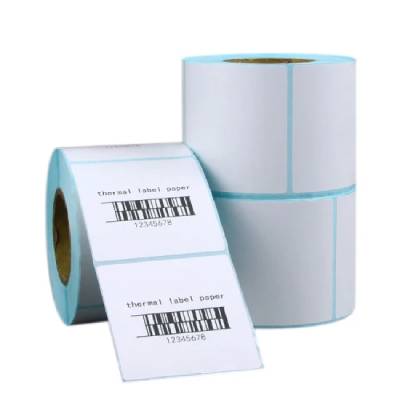
Thermal paper is heat-sensitive and is commonly used for shipping labels, billing, and price labels. It can be printed using a compatible thermal printer without conventional printing ink.
Specialty Tamper Evident Paper
Specially designed tamper evident paper can tear or break apart when someone attempts to remove it. It is used for seals and security labels where evidence of tampering is important.
If you are unsure which paper suits your product, share details about the application surface and intended use. We can help you identify suitable material options.
Adhesives: The Factor That Makes or Breaks a Label
Many labeling problems are blamed on the paper when the actual issue is the adhesive. The adhesive determines how well the label stays attached, and the right choice depends on the surface, temperature, required holding period, and operating conditions.
Glass, plastic, metal, cardboard, and fabric all have different surface properties. An adhesive that performs well on cardboard may not provide the same level of adhesion on a bottle.
Products stored in refrigerators or hot warehouses may require different adhesives from products kept at normal room temperatures. Permanent adhesives are designed for long-term attachment, while removable adhesives are intended for temporary labels and price tags.
Moisture, oil, dust, and frequent handling can also weaken adhesion. This is one of the key advantages of working directly with a manufacturer. A trader generally sells available stock, while a manufacturer can help match the adhesive to your actual product and application conditions.
Why Buy Paper Labels Directly from a Manufacturer?
Buying directly from a manufacturer can improve the entire purchasing experience, from the initial enquiry to repeat orders. You can communicate with the people who actually produce the labels, allowing you to receive practical guidance on paper selection, adhesives, finishes, and technical requirements.
| Comparison Factor |
Buying from a Manufacturer |
Buying from a Trader |
| Customisation |
Sizes, shapes, paper types, adhesives, and finishes can be customised according to requirements. |
Options may be limited to available stock. |
| Technical Guidance |
Direct advice from professionals involved in label production. |
Technical information may be limited. |
| Quality Control |
Quality can be checked at different stages of production. |
Quality depends on the original supplier. |
| Special Features |
Holograms, tamper evident features, and serial numbering may be available. |
Special features may be limited. |
| Cost |
Fewer intermediaries may provide better value for regular orders. |
Additional margins may increase the purchase price. |
| Repeat Orders |
Specifications can be maintained across repeat production batches. |
Material or quality variations may occur between batches. |
| Problem Solving |
Production-related issues can often be addressed directly. |
Resolving issues may require coordination with the original supplier. |
Industries We Serve Across Delhi NCR
We supply paper labels to businesses across Delhi, Noida, Greater Noida, Gurugram, Ghaziabad, and Faridabad. Our labels can be used across a wide range of industries.
Food and Beverage
Labels for packaged snacks, sweets, spices, bakery boxes, and bottled products.
Pharmaceuticals and Healthcare
Carton, strip, and bottle labels carrying batch details and relevant security features.
Cosmetics and Personal Care
Labels for jars, bottles, and boxes where appearance, readability, and finish are important.
Garments and Textiles
Hang tags, size stickers, and barcode labels for clothing and textile products.
Electronics and Appliances
Labels containing serial numbers, warranty information, and product ratings.
Automotive Parts
Part identification and brand labels, with optional holograms to help distinguish genuine products.
E-commerce and Logistics
Shipping labels, address labels, and barcode labels for order processing and tracking.
Stationery, Gifts, and Handicrafts
Branding stickers, packaging labels, and seals for stationery, gift items, and handmade products.
Paper Labels with Holograms: Adding an Extra Layer of Security
Ordinary paper labels can be relatively easy to imitate, which can be a concern for brands whose products are frequently counterfeited. One way to address this issue is to combine a paper label with a hologram.
The paper section carries the product information, while the hologram provides a distinctive security feature that can be more difficult to reproduce than ordinary printed graphics. This can help customers identify genuine products.
You can also add a serial number or QR code to support product verification by customers and distributors. A tamper evident feature can make it easier to identify whether a package has been opened or tampered with.
Combining these features allows businesses to retain the cost advantages and printability of paper labels while adding security features and a more premium appearance.
What We Need from You to Get Started
To manufacture paper labels that meet your requirements, please share the following details:
- Your product type and the surface where the label will be applied.
- The required label size and shape, along with your artwork if available.
- The required quantity and your preference for rolls or sheets.
- Storage and usage conditions, such as refrigeration, heat, moisture, or outdoor exposure.
- Any special requirements, including barcodes, holograms, serial numbers, or tamper evident paper.
- The roll core size and winding direction, if you use a labeling machine.
If your artwork is not ready, tell us what information needs to appear on the label. We can guide you on the layout and design requirements.
Tips for Getting the Best Results from Your Paper Labels
- Always request a sample before placing a bulk order and test it on your actual product.
- Apply labels to clean, dry, and dust-free surfaces.
- Store labels in a cool, dry place away from direct sunlight.
- Maintain sufficient clear space around barcodes to ensure accurate scanning.
- Allow enough room for all mandatory product information on the label.
- Check the latest labeling regulations applicable to your product category before finalising the design.
Frequently Asked Questions (FAQs)
1. What Is the Minimum Order Quantity for Paper Labels?
The minimum order quantity depends on the label type, printing method, and material. Share your requirements with our team to explore the available options, including smaller production runs.
2. Can You Manufacture Labels in Custom Sizes and Shapes?
Yes. Labels can be die-cut into standard shapes or custom outlines to fit your packaging requirements.
3. Do You Supply Paper Labels in Rolls or Sheets?
Both formats may be available. Rolls are suitable for machine application and faster labeling, while sheets are useful for smaller jobs and office printing.
4. Can You Add a Hologram to a Paper Label?
Yes. A hologram strip, patch, or other holographic element can be incorporated into a paper label to provide additional security and a premium appearance.
5. Can I Get a Sample Before Placing a Bulk Order?
Sample availability depends on the product and specifications. Contact our team with your requirements, and we will guide you through the available options.
6. Which Adhesive Is Right for My Product?
The right adhesive depends on the application surface, temperature, and how long the label needs to remain attached. Share details about your product and storage conditions so we can recommend a suitable option.
7. Can You Print Different Batch Numbers or Barcodes on Each Label?
Yes. Variable data printing can be used to print different batch numbers, dates, serial numbers, and barcodes on individual labels.
8. Do You Deliver Across Delhi NCR?
Yes. We supply businesses across Delhi NCR. Share your location and order requirements with our team to confirm delivery availability and details.
Conclusion
A paper label may be a small part of your packaging, but it communicates your brand identity, product information, and commitment to quality. The best label is one designed for your product, application surface, and operating conditions.
If you are looking for a paper label manufacturer in Delhi NCR, share your requirements with our team. Tell us what product you need to label, and we will help you choose the appropriate paper, adhesive, and finish for your application.